



Bot traffic is website activity generated by automated software rather than real people, and it can make a struggling website look like a thriving one. The monthly report shows sessions climbing, the line on the chart points up, and everyone feels good. Then someone asks the awkward question: if traffic is growing, why are enquiries flat? That gap between rising numbers and unchanged revenue is the bot traffic illusion.
For many Australian businesses this is not a theoretical problem. Automated visits can come from search crawlers, scrapers, spam networks, fraudulent clicks on ads and badly targeted campaigns. Left unchecked, they inflate your reports, distort your decisions and quietly drain your budget. This guide explains what bot traffic is, how to spot it in your analytics, how to reduce it and how to measure growth that actually comes from customers. If you would like a second pair of eyes on your numbers, our digital marketing services include analytics and reporting reviews.
What Is Bot Traffic?
Bot traffic is any visit to your website made by an automated program instead of a human. Not all of it is harmful. Some bots are useful and even essential, while others are designed to cause trouble. Understanding the difference is the first step in cleaning up your data.
| Type | Examples | Effect on your business |
| Helpful bots | Search engine crawlers, uptime monitors, some SEO and accessibility tools | Needed for indexing and site health, but they can still inflate raw visit counts if not filtered |
| Neutral bots | Competitor research tools, content aggregators, link checkers | Usually harmless, but they add noise to your reports |
| Harmful bots | Scrapers, spam form bots, credential stuffers, click fraud bots, fake referral traffic | Waste ad budget, steal content, spam your inbox and can create security risks |
Google explains how to confirm that a visitor claiming to be its crawler is genuine in its guide to verifying Googlebot, which is a useful reminder that anyone can pretend to be a trusted bot.
The Bot Traffic Illusion: Why Growth Numbers Can Lie
Most dashboards were built to count visits, not to judge their quality. A session from a scraper looks the same as a session from a customer unless you look deeper. This is why bot traffic can hide in plain sight for months.
The illusion usually appears in one of three ways. First, overall traffic rises but conversions do not, so your conversion rate quietly falls. Second, a campaign seems to deliver cheap clicks, yet none of them turn into leads. Third, an agency or vendor reports record traffic and everyone accepts it without checking where it came from. In each case, the headline number tells a story the bank account does not.
Warning Signs of Bot Traffic in Your Analytics
You do not need advanced tools to start. These patterns appear again and again when bot traffic is inflating a report. No single sign proves a problem, but several together are a strong signal.
| Warning sign | What it looks like | Possible cause |
| Sudden traffic spike | A sharp jump on one day with no campaign, post or news to explain it | Scraper, spam burst or an automated test |
| Zero engagement | Visits with almost no time on page and no scrolling or clicks | Automated visits that load a page and leave |
| Unusual locations | Large traffic from regions you do not serve or from data-centre cities | Bots routed through hosting providers |
| Odd hours | Steady visits at 3 a.m. local time, every night | Scheduled scripts |
| Single page landings | Hundreds of visits that only touch one URL | Crawlers or spam targeting a page |
| Strange referrers | Traffic from unfamiliar or spammy websites | Referral spam |
| Junk form fills | Gibberish names, fake emails, link-filled messages | Form spam bots |
| Clicks with no conversions | Paid clicks rise while calls and enquiries stay flat | Invalid clicks or poor targeting |
Why Bot Traffic Is More Than a Reporting Problem
- Bad decisions. If you invest more in a channel because it “grows”, you may be funding bots instead of customers.
- Wasted ad spend. Invalid or low-quality clicks consume budget that should reach buyers.
- Distorted conversion rates. Fake visits dilute your real performance, hiding what is actually working.
- Broken tests. A/B tests and landing page experiments give unreliable results when bots join the sample.
- Slower sites and higher costs. Heavy automated traffic can strain servers and hosting plans.
- Security and spam risks. Some bots probe for weaknesses or flood forms. The Australian Government’s gov.au publishes practical guidance on protecting small business websites.
- Lost trust. Clients and executives lose confidence when impressive reports do not match revenue.
Where Bot Traffic Comes From in SEO, Paid and Social Campaigns

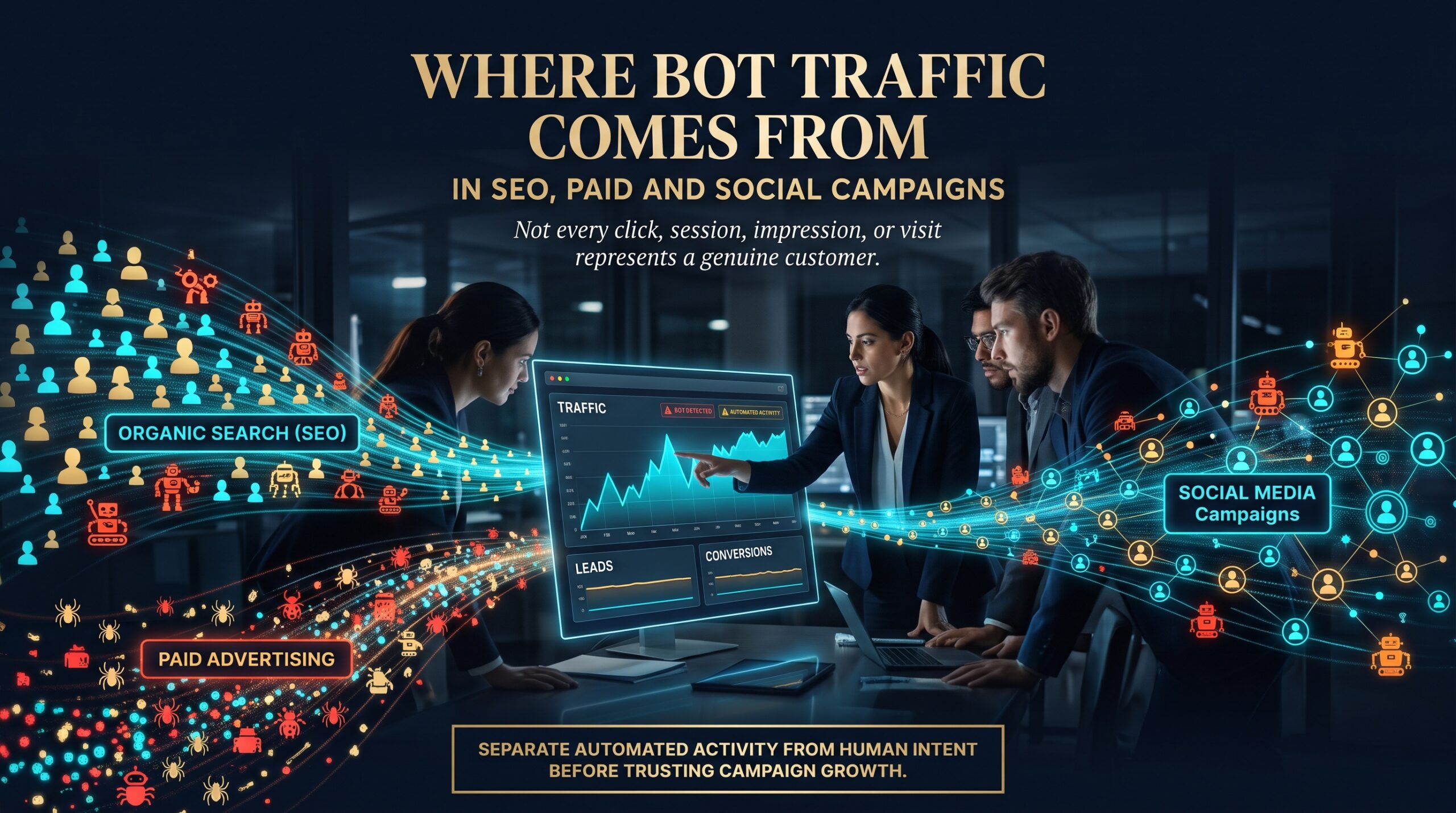
Organic and referral traffic
Scrapers copy content and probe pages. Spam networks send fake referral visits so you will click through to their sites. Crawlers from various tools visit constantly. These are common in organic and direct reports.
Paid search and display
Click fraud, accidental clicks on poor placements and loosely targeted campaigns can produce plenty of clicks with no buying intent. Broad network settings and unrestricted locations make this more likely. Our PPC and Google Ads team audits placements, locations and conversion tracking so spend is aimed at real customers.
Social media
Boosted posts and cheap traffic packages can deliver visits that look busy but never engage. Fake accounts and purchased traffic are a particular risk when the goal is only “more clicks”.
Bought traffic
Any provider promising a guaranteed number of visitors for a small fee deserves suspicion. Real visitors cost real money to attract, and a suspiciously low price per visit often means automated traffic.
How to Check Whether Your Traffic Is Real
Start by asking whether traffic growth matches business growth. These steps give a quick, practical answer.
- Compare traffic to outcomes. Line up sessions against enquiries, calls, orders and revenue by month. If one rises and the other does not, investigate.
- Segment by channel, country, city and device. Bot traffic often clusters in one source, location or device type.
- Check engagement and key events. In Google Analytics look at engagement time, events per session and conversions for each segment.
- Cross-check with Search Console. Compare organic clicks in Google Search Console with organic sessions in analytics. Large gaps deserve a closer look.
- Review server or firewall logs. Logs show IP addresses, user agents and request patterns that analytics may hide.
- Audit Google Ads reports. Check search partner and display placements, location reports and invalid click data.
- Read your form entries. Spam submissions are often obvious and tell you a form is exposed.
How to Reduce Bot Traffic
You will not eliminate all automated traffic, but you can limit the damage and clean up reporting.
- Use a web application firewall or content delivery network with bot management features.
- Add a CAPTCHA, honeypot field or similar protection to forms.
- Rate limit repeated requests and block abusive IP ranges carefully, so you do not block genuine users.
- Exclude internal traffic and filter known bad referrers in your analytics setup.
- Tighten Google Ads location targeting, exclude poor placements and review search partner performance.
- Optimise campaigns toward real conversions, such as qualified leads, rather than clicks or visits.
- Annotate your reports when you clean data, so past and present numbers can be compared fairly.
Cleaning your data is also an SEO issue. Reliable analytics help you judge which content truly earns attention, which is why our SEO services start with measurement before strategy.
Measure Real Customers, Not Vanity Traffic
The best defence against the bot traffic illusion is to judge marketing by outcomes. When the main report tracks revenue and lead quality, a bot-inflated session count loses its power to mislead.
| Vanity metric | Why it misleads | Better metric |
| Total sessions | Includes bots and low-intent visits | Qualified leads and enquiries |
| Clicks | Can include invalid or accidental clicks | Cost per qualified lead |
| Page views | Rise with crawlers and repeat loads | Engaged sessions and key events |
| Followers and impressions | Can be inflated by fake accounts | Conversations, bookings and sales from social |
| Bounce rate alone | Does not separate bots from humans | Conversion rate by segment and channel |
Checking for Bot Traffic Across Australian Cities
If you serve customers in specific cities, location reports are one of the quickest ways to spot suspicious traffic. Genuine visits from a city should broadly match enquiries, calls or bookings from that city. Here is what to check, with links to our local pages.
| City | What to check in your reports | Local page |
| Sydney | Whether high Sydney traffic produces matching Sydney leads, especially in competitive paid campaigns | Digital marketing Sydney |
| Melbourne | Traffic volume against enquiries for Melbourne landing pages and local campaigns | Digital marketing Melbourne |
| Brisbane | Local searches and ad clicks that should convert into calls and directions | Digital marketing Brisbane |
| Perth | Out-of-hours spikes and visits outside your service area | Digital marketing Perth |
| Adelaide | Small-market campaigns where a few bot visits can distort percentages | Digital marketing Adelaide |
| Canberra | Government and B2B audiences where lead quality matters more than volume | Digital marketing Canberra |
For Brisbane businesses focused on local search, you can also read about our work on digitalmarketingagencybrisbane.au, and you can compare packages through Digital Marketing Agencies.
Build the Skills to Read Your Analytics With Confidence
Spotting bot traffic is a skill every marketer and business owner benefits from. If you want to build it in depth, Logitrain offers a digital marketing course covering search, analytics and paid media. You can also learn more about us, explore our social media marketing services or read more guides on the blog.
Common Mistakes When Dealing With Bot Traffic
- Celebrating traffic growth without checking where it comes from.
- Blocking large IP ranges without testing, which can lock out real customers.
- Treating a high bounce rate as proof of bots, when it may simply reflect poor content or targeting.
- Ignoring the issue because the reports look good.
- Buying cheap traffic to “boost” numbers.
- Optimising ad campaigns for clicks instead of conversions.
Frequently Asked Questions About Bot Traffic
What is bot traffic?
Bot traffic is website activity created by automated software instead of real people. It includes helpful crawlers, neutral tools and harmful scripts such as scrapers and spam bots.
How can I tell if my website traffic is fake?
Look for spikes without a cause, near-zero engagement, odd locations, visits at unusual hours and rising sessions without more enquiries. Compare analytics with Search Console, ad reports and server logs for a clearer picture.
Does bot traffic hurt SEO?
Bots do not directly lower rankings, but they distort your data, slow your site if heavy and hide real performance. Poor data leads to poor SEO decisions.
Can bot traffic affect my Google Ads results?
Yes. Invalid clicks and poorly targeted campaigns can use budget without producing customers. Reviewing placements, locations and conversion tracking helps reduce the waste.
Should I block all bots?
No. Search engine crawlers and some monitoring tools are useful. The goal is to filter harmful and irrelevant automated traffic while allowing legitimate bots to do their job.
You can find more answers on our FAQs page.
Final Thoughts: Real Growth Shows Up in Revenue
The bot traffic illusion is persuasive because bigger numbers feel like progress. Real progress shows up in enquiries, sales and customer relationships. When you check where visits come from, filter what does not belong and measure outcomes that matter, your reports become a tool for decisions rather than a source of false comfort.
Want an honest review of your traffic quality? Request a free marketing review or call the team on 1300 649 299.